
Water Lily vs Lotus: Understanding Kerala's Ambal and Thamara
Vedic Village Journal
Visitors exploring Kerala's backwaters often notice elegant flowers floating across ponds, canals and quiet stretches of water. Most assume they are all lotus flowers. In reality, many are water lilies, known in Malayalam as ambal.
Although water lilies and lotuses both grow in water and are often confused, they are different plants with distinct characteristics, habitats and cultural meanings. Understanding the difference not only helps identify them correctly but also offers a deeper appreciation of Kerala's landscapes.
Water Lily vs Lotus: The Quick Difference
The simplest way to tell them apart is to look at how they grow.
Water lilies (Ambal) float on the surface of the water.
Lotuses (Thamara) rise above the water on long stems.
Once you notice this distinction, identifying them becomes surprisingly easy.
Feature | Water Lily (Ambal) | Lotus (Thamara) |
Malayalam Name | Ambal | Thamara |
Botanical Genus | Nymphaea | Nelumbo |
Leaves | Float on the water | Rise above the water |
Flowers | Float or bloom just above the surface | Bloom well above the water |
Natural Habitat | Backwaters, ponds, canals and lakes | Temple ponds, lakes and cultivated wetlands |
Symbolism | Wetlands, calm, nature | Purity, spirituality and renewal |
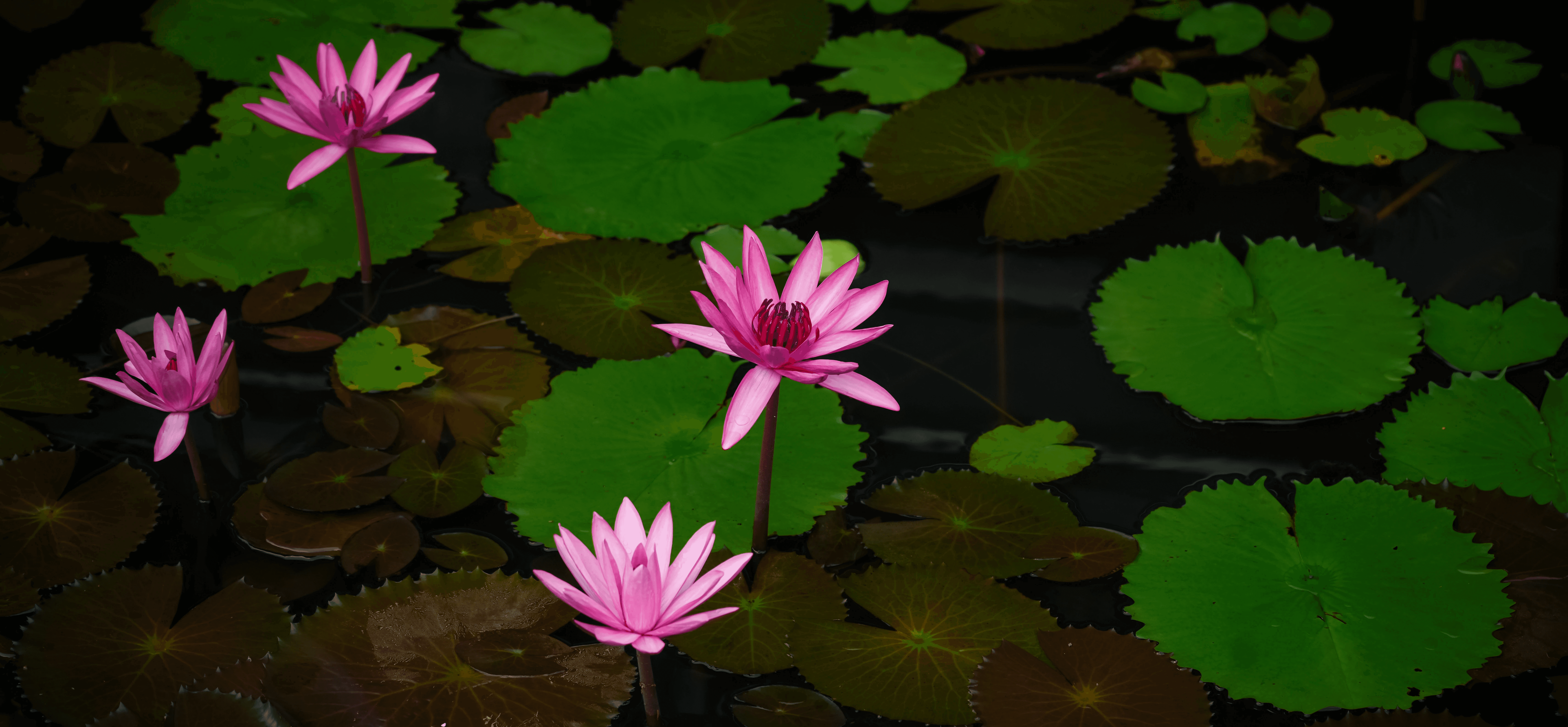
What Is an Ambal?
The ambal is the Malayalam name commonly used for the water lily.
It grows naturally throughout Kerala in ponds, lakes, canals and the state's famous backwaters. Broad green leaves spread gently across the water while delicate flowers bloom close to the surface.
Depending on the species, ambal flowers appear in shades of white, pink, blue and purple.
Unlike ornamental garden flowers, ambal often grows naturally as part of Kerala's wetland ecosystem, quietly becoming one of the defining features of the backwaters.
What Is a Thamara?
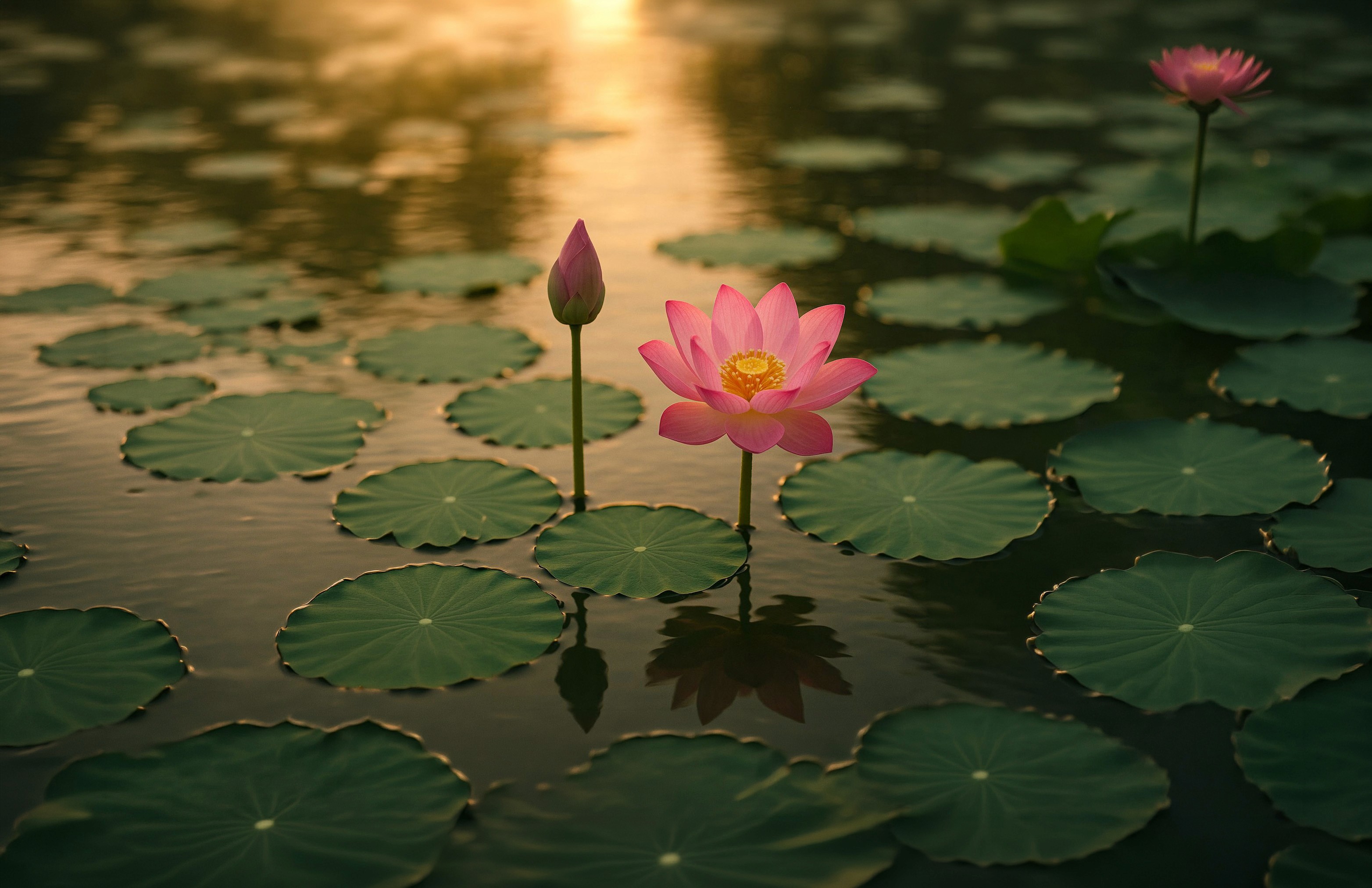
The thamara, or lotus, is one of India's most recognised flowers.
Unlike the ambal, the lotus stands proudly above the water on tall stems, with both its leaves and flowers rising clear of the surface.
Across India, the lotus has long symbolised purity, resilience and spiritual awakening. It appears in Hindu, Buddhist and Jain traditions and is frequently associated with temples, sacred ponds and classical art.
In Kerala, lotus flowers are often found in temple tanks, ornamental ponds and cultivated water gardens.
Why Do People Confuse Them?
It is easy to understand why.
Both flowers grow in water.
Both have broad green leaves.
Both bloom in similar colours.
From a distance, they can appear almost identical.
Yet once you notice whether the leaves float or rise above the water, the difference becomes unmistakable.
Which Flower Is More Common in Kerala?
Many visitors are surprised to learn that the flower they most often see in Kerala's backwaters is the water lily, not the lotus.
The calm waters of Alappuzha, Kuttanad and Vembanad Lake provide ideal conditions for ambal to flourish naturally.
Lotus flowers, while equally beautiful, are more commonly associated with temple ponds, ornamental lakes and cultivated wetlands.
For travellers exploring Kerala's waterways, the floating flowers they photograph are often ambal rather than lotus.
The Ambal and Kerala's Backwaters
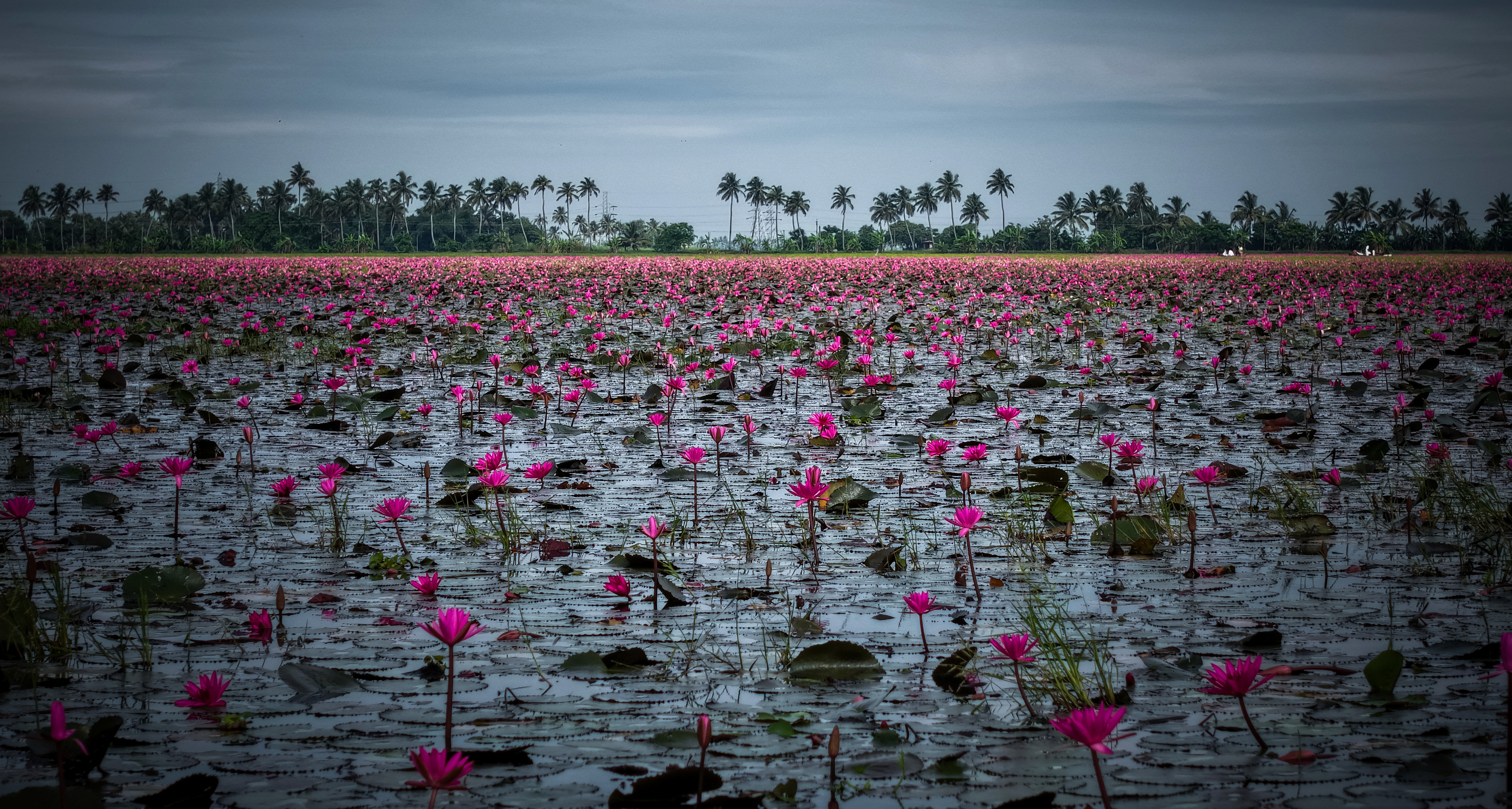
The ambal belongs naturally to Kerala's landscape.
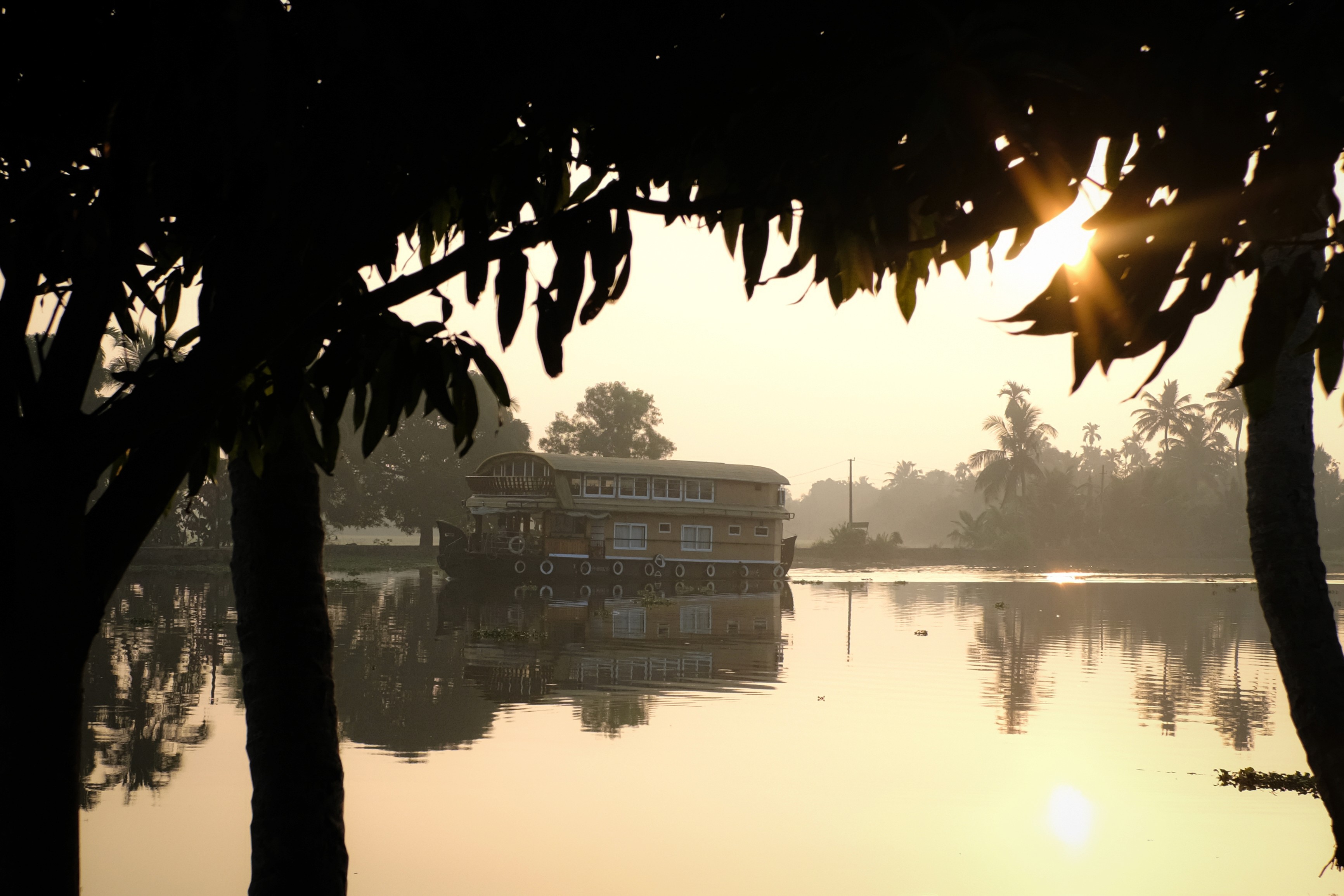
It blooms quietly beside village canals, temple ponds and narrow waterways where fishing boats pass each morning.
It appears among reflections of coconut palms and paddy fields, asking little attention yet becoming one of the quiet symbols of Kerala's wetlands.
Unlike dramatic landmarks, the ambal rewards those who slow down enough to notice it.
Experience Ambal and Tamara at Vedic Village Alleppey
One of the pleasures of staying beside Kerala's backwaters is discovering the details that define the landscape.
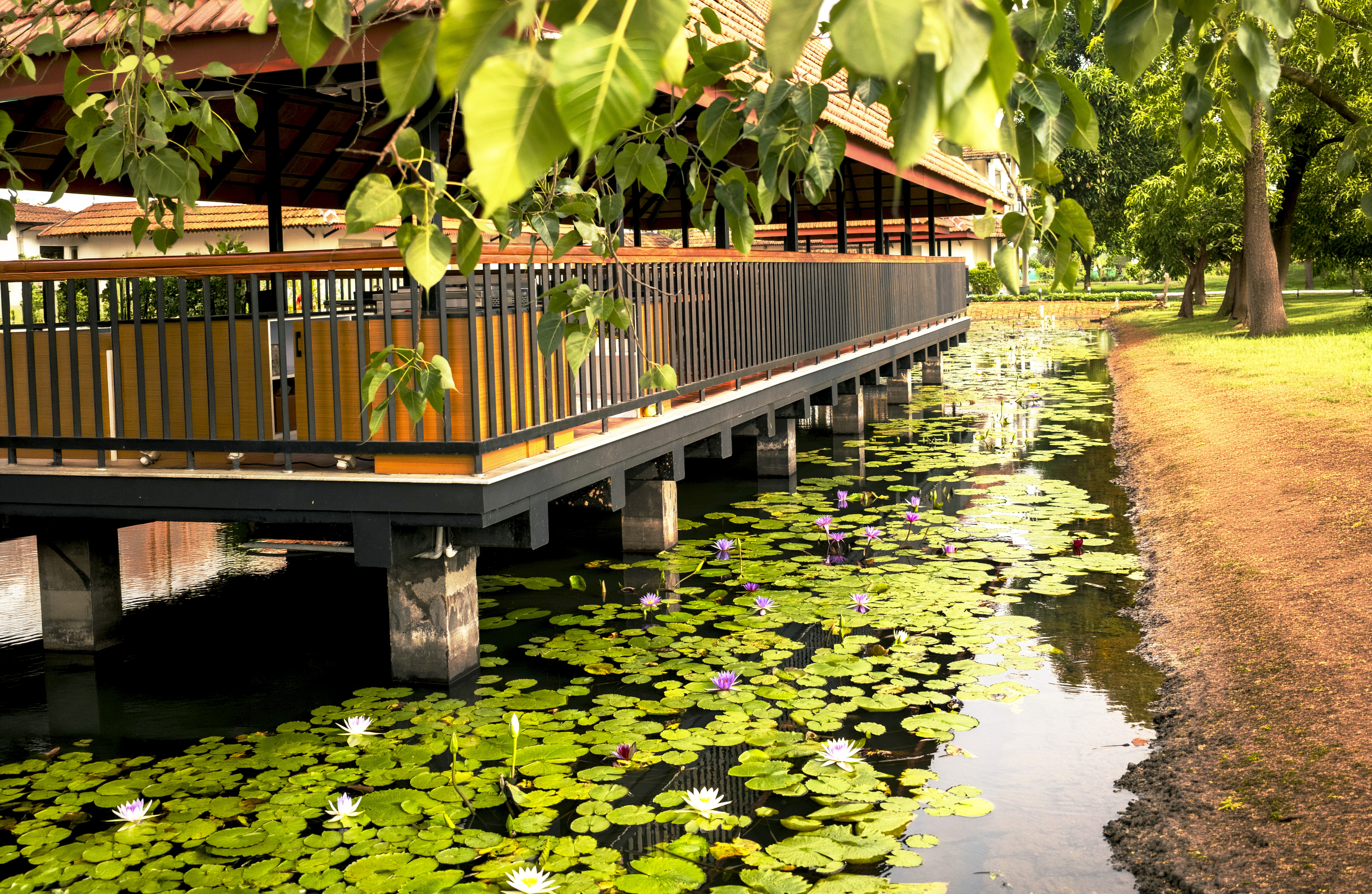
At Vedic Village Alleppey, guests exploring the surrounding waterways may encounter ambal growing naturally in the still waters around the property, depending on the season. Their floating leaves and delicate blooms have long been part of Kerala's wetland ecosystem, appearing quietly beside canals and ponds rather than as cultivated displays.
This landscape also inspired one of the property's most distinctive spaces. Our floating restaurant, Tamara, takes its name from the Malayalam word for lotus. Set beside a pond where ambal flowers bloom naturally, it creates a quiet conversation between Kerala's two iconic aquatic flowers. The lotus has long symbolised purity and renewal across India, while the water lily reflects the calm beauty of Kerala's backwaters.
Dining here becomes more than a meal. It becomes another way of experiencing the landscape that inspired the architecture, the name and the setting itself.
For travellers continuing their journey through Kerala, Vedic Village Kodungallur offers another perspective on the state's waterways. Set beside the Periyar River near the ancient port of Muziris, it reveals how rivers and wetlands have shaped Kerala's history, trade and cultural life for centuries.
Together, the two properties invite guests to experience Kerala not only through its destinations, but through the quieter details that give those places their character.
More Than Two Flowers
At first glance, the difference between a water lily and a lotus is simply botanical.
One floats gently upon the water.
The other rises above it.
Together, however, they tell a larger story about Kerala.
The ambal belongs to the backwaters, village ponds and canals that shape everyday life. The thamara has inspired centuries of art, spirituality and symbolism across India.
Both have become part of the visual language of Kerala.
Perhaps that is why they continue to inspire not only artists and storytellers, but places as well. At Vedic Village Alleppey, the floating restaurant Tamara sits beside waters where ambal flowers bloom, a quiet reminder that meaningful design often begins by paying attention to the landscape around it.
Long after visitors leave Kerala, they may forget the botanical names.
They are more likely to remember the still water, the reflection of a flower and the feeling of slowing down beside the backwaters.
Frequently Asked Questions
Is the Ambal flower a lotus?
No. The ambal is the Malayalam name commonly used for the water lily, while the thamara is the lotus.
What is the difference between a water lily and a lotus?
Water lily leaves float on the water's surface, while lotus leaves and flowers grow above the water on tall stems. They also belong to different botanical genera.
Which is more common in Kerala's backwaters?
Water lilies are more commonly seen throughout Kerala's backwaters, canals and wetlands. Lotus flowers are more often found in temple ponds and cultivated lakes.
Can I see water lilies in Alleppey?
Yes. Water lilies grow naturally across many parts of Alleppey's backwaters, village canals and wetlands, especially during and after the monsoon.
Why is Vedic Village's floating restaurant called Tamara?
The restaurant is named after the Malayalam word for lotus. Set beside a pond where ambal (water lilies) bloom naturally, the name reflects Kerala's two most iconic aquatic flowers and the landscapes that inspired the property



More from Vedic Village

A Warm Welcome, along with 10% Off
Join our newsletter for stories, seasonal stays, and updates from our villages.